
Less guessing. Clear next steps.
Job hunting feels messy when you lose track of what you applied for. Application Tracking keeps your progress clear in one place. You spend less time searching through emails and more time focusing on the roles that fit you.

Clear status at a glance
You see what stage each application is in without doing extra follow ups. You stay on top of deadlines and requests.

Fewer missed updates
You notice new messages and changes faster. You respond on time and keep your application moving.

Better focus each week
You spend your time on roles that still have momentum. You stop wasting energy on applications that already closed.

A simple record you can trust
You keep a clean history of what you submitted and when. That record helps you stay consistent across roles and interviews.
Less guessing. Clear next steps.
Job hunting feels messy when you lose track of what you applied for. Application Tracking keeps your progress clear in one place. You spend less time searching through emails and more time focusing on the roles that fit you.
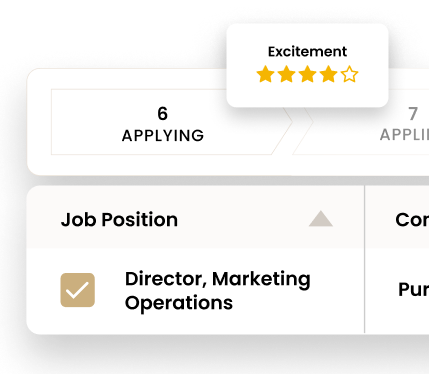
Clear status at a glance
You see what stage each application is in without doing extra follow ups. You stay on top of deadlines and requests.
Fewer missed updates
You notice new messages and changes faster. You respond on time and keep your application moving.
Better focus each week
You spend your time on roles that still have momentum. You stop wasting energy on applications that already closed.
A simple record you can trust
You keep a clean history of what you submitted and when. That record helps you stay consistent across roles and interviews.
Stop tracking applications in your head
Most people apply to several roles at once. After a few days, details blur and you forget what you sent. That is when you miss a request or reply late.
When you track applications properly, you work with a plan. You follow up at the right time and you show up prepared. You feel in control of your search.
- You keep a tidy list of applications so you know what is active and what is finished without digging through old messages.
- You stay ready for calls because you can check what the role is and what stage it is in before you respond.
- You build a steady routine because you review your pipeline and decide what to do next in minutes.

Make your job search easier to manage
A simple tracker changes how you apply. You organise your work, spot delays, and act faster. You also learn what works by looking back at your outcomes.
Stay ready for every step
You always know what you already submitted. That helps you avoid sending the wrong file or repeating details.
You prepare faster for interviews because the role context stays close to the application. You spend your prep time on the right topics.
You reduce last minute stress since you can check the stage before you reply. You respond with the right tone and details.
You keep your search steady across weeks. That consistency improves your follow through.

Follow up with good timing
You stop guessing when to check in. You follow up based on what is actually happening.
You avoid sending too many messages. That keeps your communication clean and professional.
You notice when an application stalls. You act before a role slips away.
You protect your time. You focus your effort on roles that keep moving.
Keep your work organised
You see your active applications in one place. That makes planning simple.
You set a clear priority list for the week. You apply and follow up with purpose.
You avoid duplicate applications to the same role. You also avoid losing track of similar job titles.
You keep a history you can review later. That helps you adjust your approach.
Build confidence in your search
You stop relying on memory. You rely on a clear record.
You feel more prepared when someone calls. You know which role they mean.
You learn faster from results. You see patterns in stages, response times, and outcomes.
You make better choices over time. You put more effort into the roles and employers that respond well.

Track applications without the extra work
You already do the hard part by applying and showing up. Tracking should not add more steps to your day. Keep your applications organised so you can respond faster and stay prepared.
Use Application Tracking to stay clear on what is next. Keep your search focused and consistent. When you can see your progress, you make better decisions and you waste less time.